The Ingenious Ingenieur
As seen in The New York Times
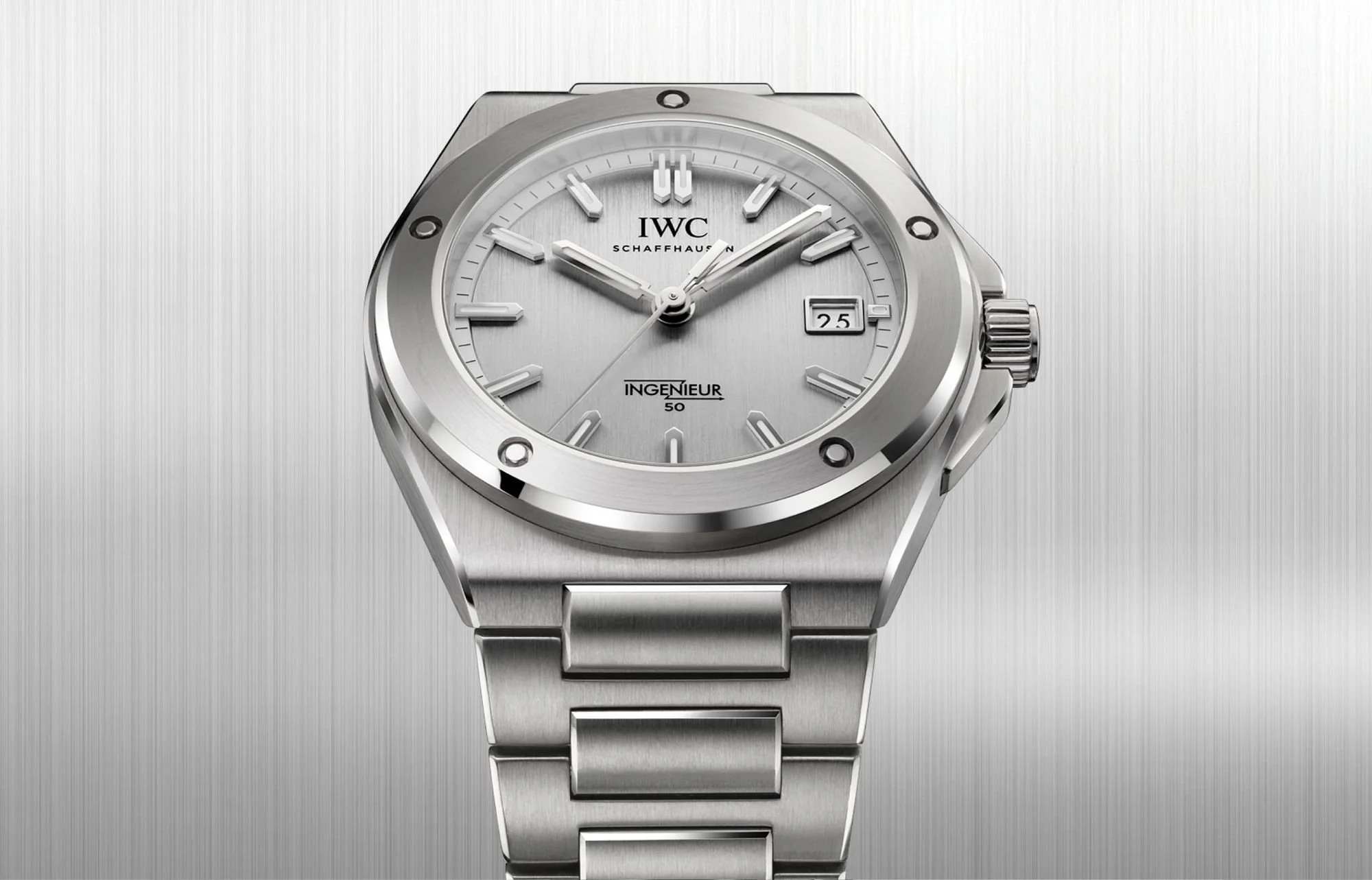
A good timepiece is timeless. Amid the apps, the algorithms and the supercomputers that live on our wrists, the saturation of tech tools feels overwhelming. These days (maybe always), we yearn to use items that engage our senses — to hear mechanical movement, to see gears turn in harmony, to feel the push in and out of a button. Many consumers are catching on to something watch collectors have known all along:
A device being analog doesn’t take away from its value. In many ways, it enhances it.
I realize this halfway through conversations with the design professionals at IWC, the luxury watchmaker founded in 1868. Immediately feeling silly, I wore a smartwatch to the interview. IWC’s full name, International Watch Company, is so straightforward it often results in a reassuring grin. Equally reassuring are the company’s timepiece designs, from its Pilot’s Watches to its Aquatimers to its Portofinos. And then there’s the Ingenieur — the timepiece initially designed for engineers, then eventually the world. IWC’s resident historian shows me how the Ingenieur became one of the most notable watches in watch design history. But it definitely didn’t start out that way.
The Context
David Seyffer, IWC’s museum curator, says, surprisingly, that few people liked the Ingenieur at first. Not just for one or two years but for decades.
“When the Ingenieur came out in 1955, luxury meant gold,” Seyffer says. “Until the 1970s, to release a stainless steel watch at that price was a daring choice. Combine that with the fact that the Ingenieur was a tool watch and it was hard at first convincing customers the watch was luxury.” Unlike watches meant just for telling time, tool watches offered more durability and functionality. For the Ingenieur, that meant there were two pretty big technological advancements tucked inside (more on these later). Still, the watch, for many consumers, just didn’t look the part.
That was the first of a few problems for IWC. Seyffer then tells me how, in the 1970s, Swiss watchmakers encountered what became known as the quartz crisis. Watches with mechanical movement first emerged in the 15th century, using a series of gears, springs and levers in order to tick-tock. Five hundred years later, quartz watches offered a hardware update. “These newer watches were battery-powered and cheaper to produce,” Seyffer says. “Quartz options rose in popularity, replacing mechanical watches for many.” This sent many Swiss watchmaking companies into crisis mode, wiping out two-thirds of Swiss watchmaking jobs. “Many thought it was the end of mechanical watchmaking.”
The Ingenieur had to endure a major, once-in-a-multigenerational shift in timekeeping. And that was in addition to customers thinking this luxury watch didn’t look especially luxurious. IWC made one very big move to address that.
The Exterior
Enter Gérald Genta.
In 1976, IWC enlisted the help of this watch designer to give the Ingenieur a facelift. “Genta didn’t just create a design that differentiated the Ingenieur; he created a design signature,” Christian Knoop, IWC’s chief design officer, says. “A signature so recognizable that it really stands out from a distance. The design is so distinctive that it has survived the portfolio for 50 years despite all the changes and modifications that were done to the original design.”
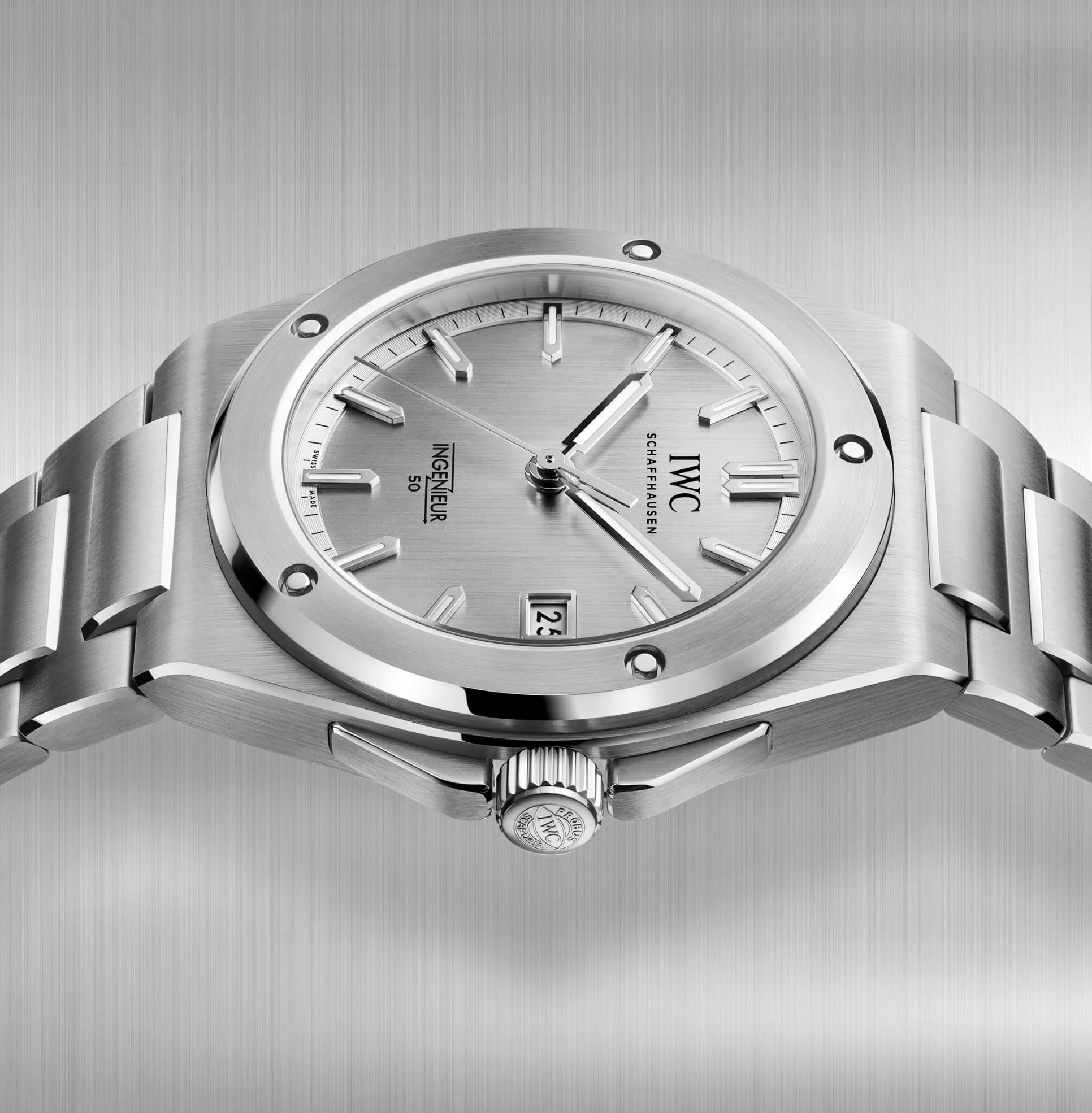
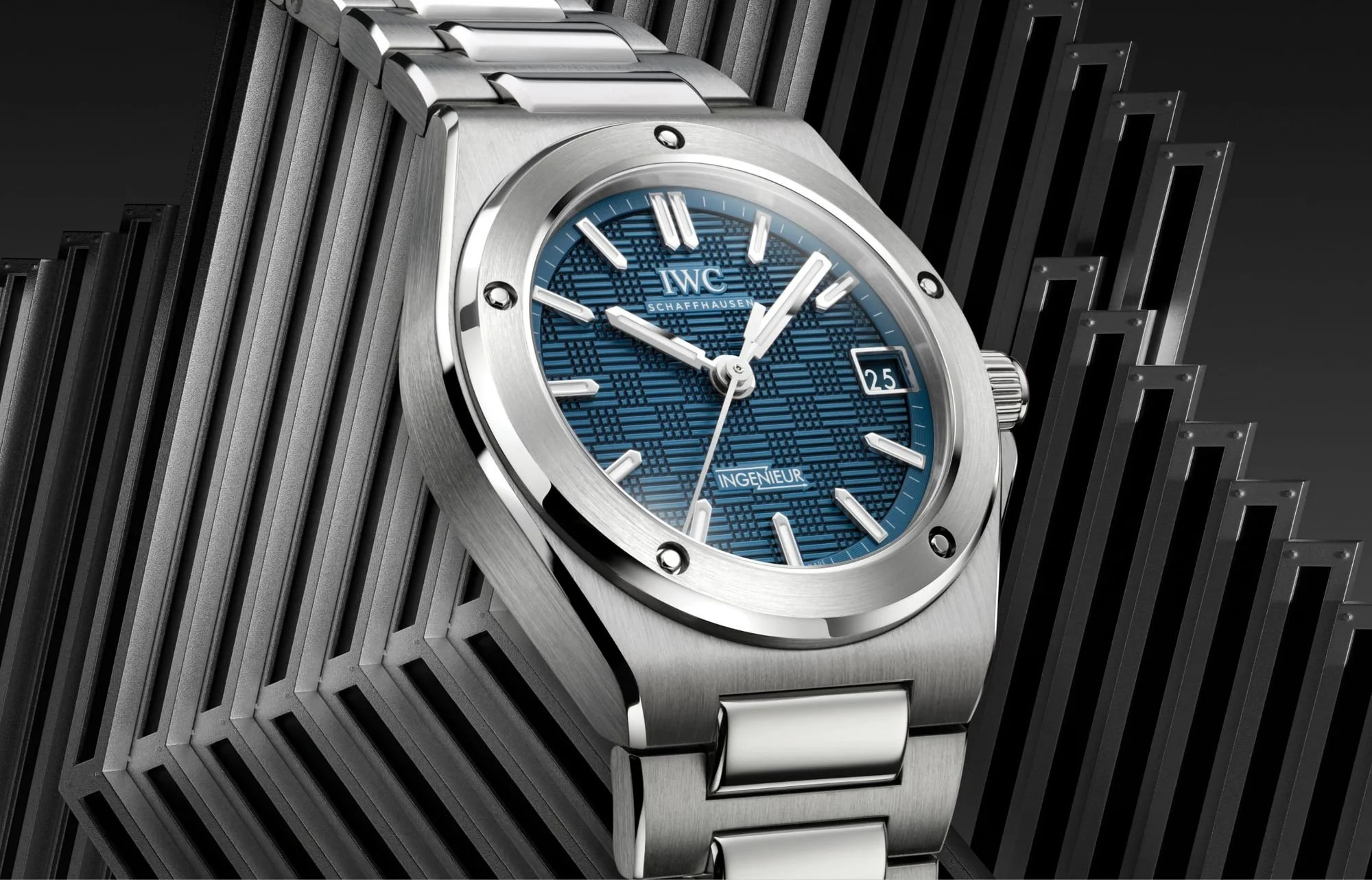
The watch looks gorgeous, but more than that, it looks unlike most other watches. Knoop walks me through why. “It’s the distinct silhouette,” he says, “the bezel with five bores on the front, the choice of textured dial, the H-link bracelet, the crown protection for added durability, the grid-pattern on the watch’s face — these make up the Ingenieur’s DNA.” The terms he throws out are all Greek to me. I know the bezel is the border around the watch face but then learn that the bores are the holes with screws around the face. And added crown protection adds a barrier from the nicks and dings of everyday use.
All these plus the overall shape of the watch give it a truly unique look. As IWC’s chief marketing officer, Franziska Gsell, puts it, “What’s remarkable about this design is how naturally it works in so many different executions. No matter the size, material, color or complication, the incredible character of Genta’s design remains instantly recognizable.”
I look up at the Ingenieur, then down at my smartwatch. One suddenly feels like it carries a lot less gravitas than the other.
The Interior
It’s no surprise that “ingenieur” is the German word for “engineer” — IWC made the watch with engineers in mind. Remember those two technological advancements? The first was tailor-made for the engineering crowd.
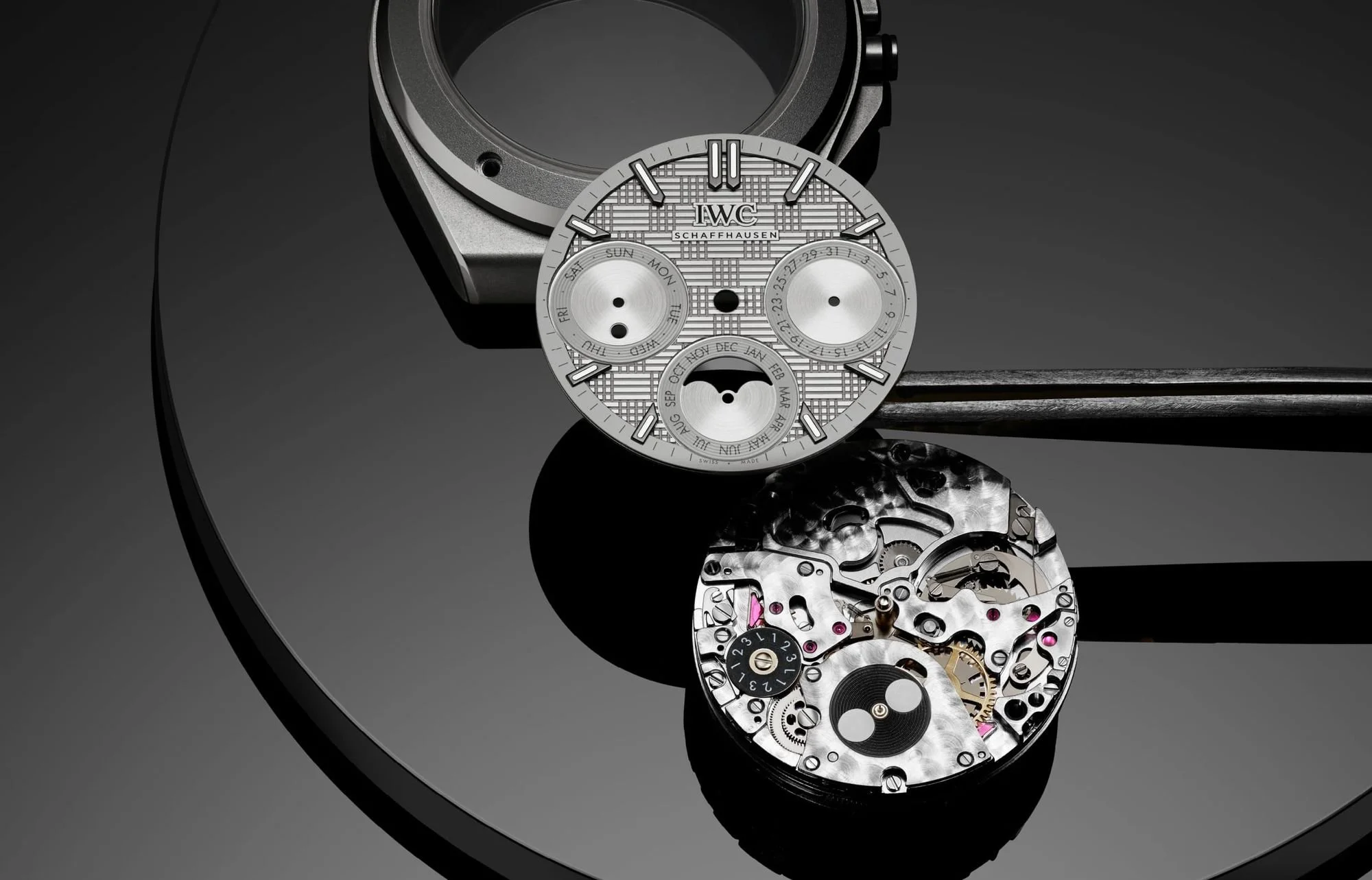
“When IWC launched the Ingenieur SL in 1976, the watch was marketed almost exclusively as an antimagnetic wristwatch specifically for engineers and other professionals who were exposed to strong magnetic fields in their line of work,” Gsell says. Even though IWC looks back at this as a mistake, claiming the feature was too narrow in appeal, it lent to the level of craft the company put into its timekeeper, both inside and out. “Shielding the movement with a soft iron cage was very important,” Seyffer says. “With magnetic protection, the Ingenieur was a luxury watch that you could also use daily.”
The second technological advancement was perpetual power reserve. “The first Ingenieurs came to market with a bidirectional winding mechanism, which was engineered by IWC head of watchmaking, Albert Pellaton,” Knoop says. This meant the watch was able to keep telling time longer and more accurately on its own. The Ingenieur itself was an engineering marvel.
Fast forward to today. The watch has seen some iterations inside and out to keep it capable yet comfortable. “When we launched the modern Ingenieur in 2023, we were very conscious not to repeat the mistakes of the past,” Gsell says. “Rather than focusing primarily on its technical credentials, we positioned the new Ingenieur as a carefully refined reinterpretation of Genta’s iconic 1970s design, one that stays true to the aesthetic while significantly improving ergonomics, wearability and finishing.” Knoop tells me how the company, over time, continues to iterate on the Ingenieur.
“We reworked the proportions of the case and bracelet for added wrist comfort,” he says. “Then we reworked the bezel, altered the finish of the dial and added crown protection. All of these adjustments add up to improved comfort while still being able to keep that signature Ingenieur look.”
Standing the Test of Time
These days, many of the most popular companies make items that are engineered specifically to be replaced, often within a year. Far fewer companies make devices today that will last tomorrow — an object that you can see and hear and fix and break and pass down to loved ones because, 100 years from now, it will still work. As I speak with IWC about the commemorative 50th anniversary Ingenieur watch, I realize the important part isn’t only the Ingenieur’s last 50 years — it’s the next 50. A generation from now, how will the watch owners of tomorrow appreciate the Gérald Genta Ingenieurs being worn today?
